
Kidney Stone & Urinary Care
Natural Botanical Lithotriptic Care for Ashmari (Renal Calculi)

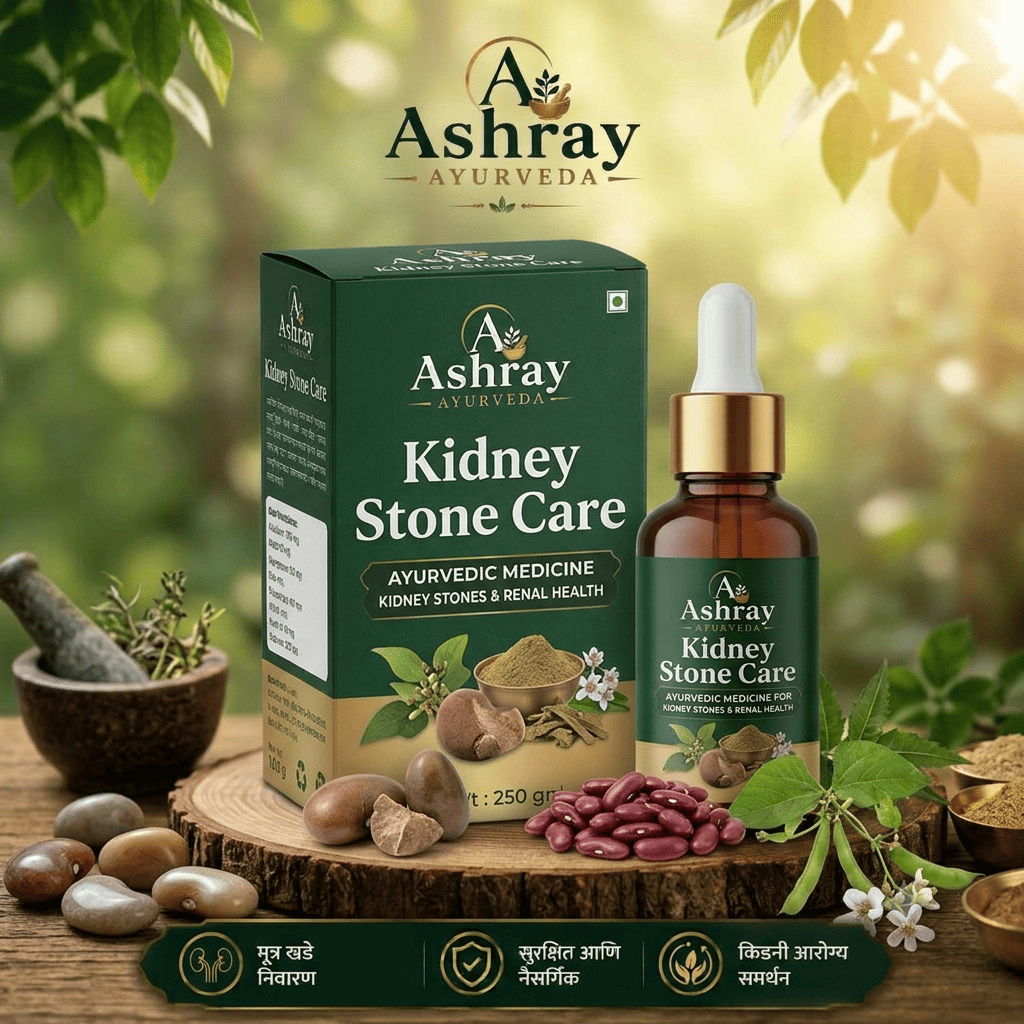
Understanding the Condition & Root Cause
Kidney stones (known as Ashmari in Ayurveda) are crystalline mineral deposits formed in the urinary tract when concentrated urine allows minerals to crystallize and aggregate. In Ayurveda, this condition occurs due to imbalance in Vata (drying up the urine) and Kapha (forming the crystalline matrix/stone nucleus) within the Mutravaha Srotas (urinary channels).
Dr. Shivani Kulkarni’s clinical approach combines ultrasound evaluation with time-tested Ayurvedic lithotriptic (stone-dissolving) therapies to facilitate natural passage of stones, relieve excruciating spasms, and correct the underlying metabolic imbalance to prevent recurrent stone formation.
Common Symptoms & Indications:
- Sudden, intense flank pain radiating to the lower abdomen or groin
- Burning sensation during urination (dysuria) and cloudy urine
- Frequent urge to urinate with minimal urine output
- Post-operative recurrence of calcium oxalate or uric acid stones
Our Ayurvedic Approach & Formulations
Our natural protocol relies on specialized botanical herbs known for stone expulsion and urinary tract toning:
- Lithotriptic (Ashmari-Bhedana) Herbs: Pashanbhed (Bergenia ligulata), Varun (Crataeva nurvala), and Kulatthi (Horse gram decoction) to gradually soften and disintegrate small stone edges.
- Natural Diuretics (Mutral Herbs): Gokshura (Tribulus terrestris) and Punarnava to increase urine volume and generate gentle hydrodynamic flushing pressure.
- Mucosa-Soothing Demulcents: Herbs to heal micro-scratches in the ureter and eliminate burning sensation.
Diet & Lifestyle Guidelines (Pathya & Apathya)
In classical Ayurveda, proper dietary discipline is considered equal to medicine itself in supporting natural recovery.
Pathya (Foods & Habits to Favor)
- Drink 3 to 3.5 liters of clean water daily; barley water and fresh coconut water
- Kulattha (Horse gram) soup 2–3 times a week
- Coriander seed tea (soak 1 tbsp seeds in warm water overnight and drink)
- Watermelon, cucumber, and fresh lemons (citrate helps prevent crystals)
Apathya (Foods & Habits to Avoid)
- Tomato seeds, raw spinach (Palak), brinjal, and high-oxalate foods
- Excessive red meat, salty packaged snacks, and artificial aerated sodas
- Suppressing the urge to urinate (Vegadharana), which causes urinary stagnation
- Extreme dehydration during outdoor travel and heavy sweating
What to Expect During Your Treatment
Quick reduction in burning micturition, soothing of urinary tract inflammation, and relief from painful spasms.
Under diuretic and lithotriptic herb action, small calculi (especially under 7–8mm) begin to fragment and flush naturally.
Dietary realignment and tonic therapy to normalize urinary pH and stop new stone crystallization.
Frequently Asked Questions
Ayurvedic formulations are highly successful for stones up to 7mm to 8mm in the kidney, ureter, or bladder. Larger stones or impacted stones causing severe hydronephrosis are evaluated carefully under medical imaging.